Workplace Violence


It is not uncommon now to turn on the TV, read online, or receive an alert on a mobile device describing another mass shooting at a place of employment. Just recently, 12 lost their lives at a municipal building in Virginia Beach, Virginia. With the continuing escalation of mass homicidal workplace incidents, employers are turning to Human Resource (HR) professionals for answers as to how to prevent this type of situation. While there may not be any guaranteed answers to prevent 100% of potential violent workplace situations, there are preventative measures that employers should be adopting to mitigate risks.

First, let’s look at the facts of workplace violence, with an understanding that while the mass shootings receive media attention, not all workplace violent situations rise to that level yet have equally disturbing statistics. According to OSHA (Occupational Safety and Health Administration), the regulatory governing agency with oversight of workplace safety, has complied the following statistics:

  • 2,000,000 workers annually report being a victim of some form of workplace violence
  • 18,400 non-fatal workplace assault injuries occurred in 2017
  • Homicide is the fourth leading cause of fatal occupational injuries in the United States with 458 fatalities in 2017
workplace violence


Under OSHA’s General Duty clause employers are “required to provide their employees with a place of employment free from recognized hazards that are causing or are likely to cause death or serious physical harm.”

OSHA defines workplace violence as “any act or threat of physical violence, harassment, intimidation, or other threatening disruptive behavior that occurs at the work site.” Workplace incidents can range from threats and verbal abuse to physical assaults and homicide behavior if it violates Title VII of the Civil Rights Act of 1964 or the Age Discrimination or the Americans with Disabilities Act.

OSHA prescribes that employers should: (1) maintain a zero-tolerance policy of such behaviors and (2) that the policy include a grievance policy through which an employee can report claims of behavior or safety violations.

A zero-tolerance policy should not only include physical violence and homicide but threats, bullying, and verbal abuse as well. These should just not be line items in an unacceptable behavior policy. Best practices would suggest that a separate Workplace Violence Prevention policy be adopted. Policies should include training for supervisors, employees, and be coordinated with building managers, local law enforcement, hospitals, etc., so that employees are proactively prepared to respond appropriately.

Employers should have resources in place to make referrals to an Employee Assistance Program, as well as mental health resources through their health plan. Supervisor training would include how to make referrals to these resources.

Supervisor training should also include awareness of potentially violent warning signs and how to coordinate with Human Resources for safeguarding the workplace. While some behaviors maybe more obvious than others, warning signs would include:

  • Intimidating, belligerent, harassing, bullying, or other inappropriate and aggressive behavior;
  • Numerous conflicts with supervisors and other employees;
  • Bringing a weapon to the workplace, brandishing a weapon in the workplace, making inappropriate references to guns, or fascination with weapons;
  • Statements showing a fascination with incidents of workplace violence, statements indicating approval of the use of violence to resolve a problem, or statements indicating identification with perpetrators of workplace homicides;
  • Statements indicating desperation (over family, financial, and other personal problems to the point of contemplating suicide);
  • Drug/alcohol abuse; and
  • Extreme changes in behaviors.


While no industry is immune from the potential hazards of there are some industries which workplace violence maybe more prevalent. These industries include: workers who exchange money with the public; deliver passengers, goods, or services; or work alone or in small groups, during late night or early morning hours, in high-crime areas, or in community settings and homes where they have extensive contact with the public. This group includes healthcare and social service workers such as visiting nurses, psychiatric evaluators, and probation officers; community workers such as
gas and water utility employees, phone and cable TV installers, and letter carriers; retail workers; and taxi drivers.

While OSHA has no standard in place for regulating workplace violence there are several states (including California) who have implemented standards for the healthcare and social employer industry, two industries with the highest occurrences for workplace violence. Human Resources should be aware of and stay updated on both federal and state regulations for the prevention of workplace violence.

Every situation that garners media attention is an opportunity for employers to be vocally sympathetic and empathetic to the situation, recognizing that it could happen in their place of business or in their community at any time. Employers should inform employees regularly that they take such situations very seriously and use opportunities to review the Workplace Prevention Policy with employees periodically. Employers can also provide a reminder of Employee Assistance Program (EAP) and mental health provisions of their health plan. If workplace violence has occurred in their community, the EAP should be brought on site to help employees through the emotional upheaval both through overview meetings and confidential one-on-one meetings.

To recap, while preventing workplace violence may not always be guaranteed the best practices employers should adopt are:

  • Develop, train and maintain a Workplace Violence Prevention Policy and Weapons Policy
  • Coordinate response plan with building owners, local police department, hospital
  • Follow your state/local procedures for conducting background checks on all applicants
  • Conduct pre-employment assessment testing
  • Performance Management – clear communication
  • Use Mental Health benefits including Employee Assistance Programs
  • Maintain a holistic wellbeing culture that focuses on the physical, financial, emotional and social wellness of your employees.
  • Know your employees.


Written by Bobbi Kloss, Benefit Advisors Network Director of Human Capital Management Services, published in Entertainment Human Resources Network.
Dress Codes: Designing, Implementing, and Enforcing.

There was a time, and still suggested today, when it was advised to dress for the position you wanted, not the one you were in. Dress codes were and still are about empowerment―but the question is, whose empowerment?

Traditionally, dress code policies were designed to set white collar apart from the blue-collar worker, the executive from the administrative staff. They were individualized to the industry one was in or to distinguish the workers from the industry being served (retail, hospitality). Policies focused
their objective on a definition of professionalism that related the clothes to the business attitude of trustworthiness and reliability.

Today, it is still about empowerment. Aligning with the DNA of the generation(s) that employers are focusing on attracting and retaining, dress codes established today focus on setting that individual company culture. Take for example the “dress appropriately” dress code policy at General
Motors
. Such dress code policies allow for the actions of the company, its product, and the service-minded ethics of the workforce to exemplify reliability and the attire of the personnel then become about relatability. What becomes created is a culture where supervisors and employees are empowered to think for themselves in determining what is appropriate to wear to work and for them to come together to provide viable solutions when challenges present themselves.

The relaxation of today’s dress codes also allows for more personal expression advancing the forms that diversity in the workforce can take. Whereas men’s haircuts may be longer, non-existent, bolder colors in women’s hair, tattoos, large, bulky jewelry, transgender employees, religious customs, and generational norms, are just a few of the consideration’s employers are looking at within the make-up of the workforce. For many companies, the line being drawn is focused on what
is not distracting or disruptive to the workplace and what falls within non-discrimination guidelines.

In some industries, i.e. tech and marketing companies, the CEO now may be hard to tell apart from the staff. With today’s entrepreneurial-minded generations moving quicker up the corporate ladder, they are the dress code trendsetters versus what may be considered the “suppressed” (ties, dresses, pantyhose, etc.) dress code of the prior generations.

There even seems to be less “casual Fridays,” as every day is business casual or casual. In addition, having the ability to work remotely from home also promotes an unmonitored dress code. Remember the bunny slippers commercial?

In designing or updating dress code policies for today, and as in any policy development, Human Resources needs to define the objective of the dress code. What is the message the company wants to convey to its employees and the customers it represents? Some dress codes are meant to send a
message about the company’s image or style―think about a trendsetting salon or restaurants… [Read the full article]

Written by Bobbi Kloss, Benefit Advisors Network Director of Human Capital Management Services, published in Entertainment Human Resources Network.

Stop Misuse of Family Benefits

Written by Stephen Miller, CEBS, including comments from Bobbi Kloss, Benefit Advisors Network Director of Human Capital Management Services. Published on SHRM.org, March 27, 2019.

Some workers intentionally abuse family-perk policies, while others are just confused.

United Airlines fired more than 35 employees in March for selling travel passes intended for employees’ immediate relatives. Free or discounted travel is a common family perk in the airline industry, the Chicago Tribune reported. When selling these passes, sometimes for several thousand dollars apiece, employees falsely registered the buyers as their stepparents or domestic partners.

“The rules are there to make sure everyone can enjoy the benefits,” said Danielle Capilla, Chicago-based director of employee benefits compliance at Alera Group, an insurance and financial services firm. Her father, an airline pilot, made sure everyone in her family understood those rules.

Whether misusing travel perks, allowing relatives to drive a company car or extending discounts to people who aren’t eligible for them, those who violate family-perk policies “think they’re not going to get caught,” Capilla said.

“Abuse of employee benefits and perks is a continuous frustration for employers,” added Bobbi Kloss, HR leader at Benefit Advisors Network, a Cleveland-based consortium of health and welfare benefit brokers. “From the CEO and top executives to the line workers, no level of employee is immune from committing abuses.”

Dependent-Eligibility Audits

A common misuse of family benefits occurs when employees add ineligible relations as family members under their employer’s health plan. To combat this practice, 43 percent of employers routinely conduct dependent-eligibility audits of their health plans, according to a recent report from the nonprofit International Foundation of Employee Benefit Plans. When conducting an audit, HR consultancy Mercer estimates that most companies will find 3 percent to 10 percent of plan members to be ineligible. Given that the average annual cost of each covered dependent is $4,570, Mercer found, the expense of covering ineligible dependents can add up quickly.

Capilla encourages employers to conduct dependent audits “every year if there have been issues, and at least every three years otherwise.”

“Not all misuse is intentional,” said Anna Phalen, vice president of account management at Jellyvision, a benefits communication software firm in Chicago. “In some cases, employees may not know they’re stepping over the line, or they may not be aware there are penalties for doing so.”

One reason workers grow confused over dependent eligibility, Phalen noted, is that the Affordable Care Act allows adult children up to age 26 to stay on a parent’s employer-provided health plan, whether they are dependents or not. Also, in recent years, many benefit plans have expanded their definition of eligible dependents to include unmarried partners and stepchildren. These developments, she said, “make it all the more important to clearly articulate the rules on who qualifies.”

Family Leave Misuse

Misuse of time off is also costly for employers, especially for intermittent absences taken under the Family and Medical Leave Act (FMLA) by employees who don’t actually need to attend to their own or a relative’s health needs.

“You can’t solve for every misuse of leave. But you can design your leave program and policies to help deter misuse,” Capilla said. How employers go about that depends on the problems they’re seeing, she said, joking about the “30 percent of the workforce seeking intermittent FMLA on every sunny Friday.”

[SHRM members-only toolkit: Managing Family and Medical Leave]

Clarify What’s Allowed

Employees may have been told about benefits restrictions when they were hired or went through open enrollment, Phalen said, but that information should be reiterated when they make changes to their benefits, such as adding dependents to a family health plan.

When employees receive a thick handbook during onboarding that’s filled with benefits jargon, “it can be overwhelming,” said Bill Gimbel, president of LaSalle Benefits, an insurance brokerage in the Chicago area. Employers should describe their benefits rules “in terms that are simple enough for all employees to understand, yet thorough,” he said. “A detailed handbook may be helpful for your HR team, but a PowerPoint or visual one-sheeter that provides an overview of your benefits offerings may be better for the rest of your employees.”

Taking Action

Intentional abuse of employer benefits can be a firing offense, and, in some cases, employers may want to sue to reclaim the value of misappropriated benefits or press criminal charges.

However, “for abuses, I advise having a ‘strike’ system,” Capilla said, as in two or three strikes and you’re out. “There are honest mistakes that happen. At the same time, you don’t want to swing to the other end and only slap people on the wrist.”

“No matter what is done to tighten the reins, as long as there are unethical people in the workplace, abuse will continue,” Kloss said. Many employers “jump the gun and discontinue the benefit or perk, affecting all employees instead of addressing the behavior of the abuser,” she added. That can lead to employee morale issues, especially when a discontinued benefit made the job particularly attractive.

To reduce benefits fraud, employee benefits professionals recommend these steps:

  • Work with managers. “Lack of well-being—financial, social, emotional and physical wellness—could be driving employees to make bad choices,” Kloss said. Managers may be able to pick up on those situations. Train your managers to identify signs of misuse, Gimbel added. “Educate them on what to look for, and be sure that they report it back to HR.”
  • Use HR software. Software can be used to track the receipt of health providers’ certifications and recertifications for FMLA leave requests, for instance, which can help expose abuses, Gimbel said.
  • Stay organized and be proactive. Regularly track and monitor benefits use, whether through spreadsheets, online forms or HR information systems, Gimbel advised. “If, along the way, your team catches wind of potential benefits misuse, be proactive and address it immediately.”

View the article Stop Misuse of Family Benefits on SHRM.org

An Update on the DOL’s 2016 Wage Injunction

Written by Bobbi Kloss, Director of Human Capital Management Services, Benefit Advisors Network. Published in Entertainment Human Resource Network, February 2019 edition.

Silent but ever present, the Wage and Hour division of the Department of Labor (DOL) has been working its way back to updating the overtime exemptions for the Administrative, Executive and Professional exemptions otherwise known as White Collar exemptions. These White Collar exemptions set standards by which employees who have met the established standards are exempt from having to be paid time and one half salary for working over 40 hours in a work week. With a weekly earning threshold of $455.00, as one of these requirements to meet the exemption test, which has not been increased since 2004, it is a guessing game as to how much of an adjustment will be made at the salary level. While the DOL had previously issued regulations with an increase to $913 weekly, or $47,476 annually, that ruling was halted… [read more]

Holistic Wellness: Why it matters now

With the tight labor market and new generations in the workforce, the C-suite should be asking what they can do to remain relevant.


Written by Perry Braun, Executive Director of Benefit Advisors Network, and Bobbi Kloss, Director of Human Capital Management Services. BenefitsPro.com, February 11th, 2019.


Life happens. Things happen every day that we rarely give a second thought to as we go about our daily routines.

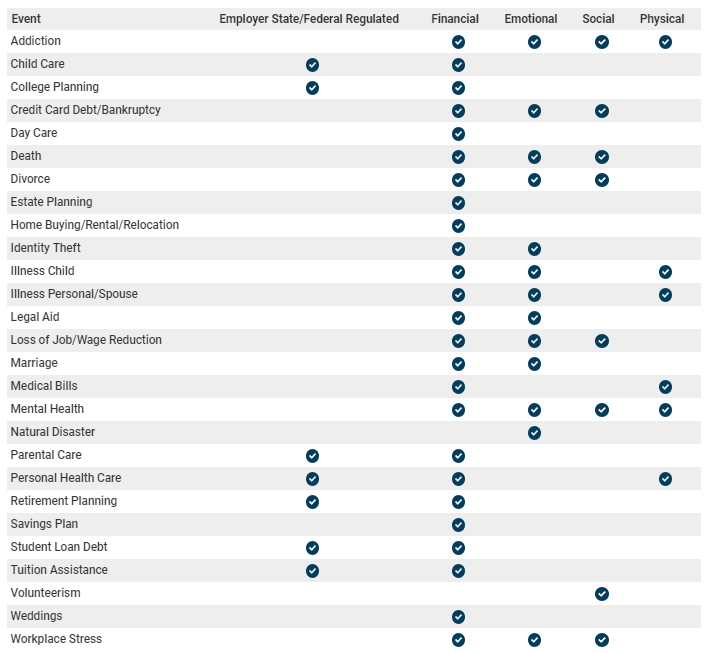
High impact life events are another story. Not only do they disrupt our daily routine, but they can stop us dead in our tracks and affect every aspect of our lives: physically, emotionally, financially and even socially. Even planning for an expected event can seem to be overwhelming and disruptive.

Holistic Wellness – High Impact Life Events

When a high impact life event happens to an employee, the effects can ripple throughout the workplace. The distractions of the event can cause performance issues, absenteeism and presenteeism. Supervisors and HR traditionally have dealt with these issues through corrective actions, up to and including termination of employment. But changing workforce dynamics show us why employers need… [Read More]